
When Monica Cabrera wasn’t sure the groceries would last the week, she skipped meals so her son would have enough.
“I’ve gone without meals to make sure that there was enough portions for the rest of the week for my son,” Cabrera said.

Cabrera, a Harris County resident and certified medical coder, said she turned to the Supplemental Nutrition Assistance Program, or SNAP, after she was laid off in August 2025. She took contract work while looking for a full-time job. The roughly $507 a month in benefits helped her buy protein and fresh produce while managing diabetes and feeding her son. At a farmers market, she said, she could stretch $25 in benefits into $50 worth of produce.
“SNAP is not a get-out-of-jail-free card,” Cabrera said. “It takes time to apply. It takes time and effort to make sure you’re in compliance with the documents.”
She said she’s worked since she was 14 and sees SNAP as “a tool, you know, to serve as a bridge until your life improves.”
Cabrera said she lost her benefits in February after reporting extra income from a contract project that pushed her over the income limit. The extra pay came from one project, and she said there was no guarantee the work would continue.
“It was really discouraging because I felt like I was being penalized for being honest,” Cabrera said. “And, you know, I never stopped searching for a full-time job this whole time.”
About 700,000 fewer Texans were receiving SNAP than in July 2025, according to Brian Sasser of the Episcopal Health Foundation, citing state enrollment data. In Harris County, enrollment fell by about 138,000 people, or roughly 20%. That decline included about 73,000 children, Sasser said.

“So where did they go? How did they get off?” Sasser said. “And then what happens to those families who are trying to feed those children?”
Sasser pointed to several possible reasons for the decline, including new work and immigration eligibility rules and delays in processing applications. He said fear of immigration enforcement may also keep some families from applying, even when their children qualify. Cabrera attributed her own loss of benefits to her income.
Under the 2025 federal law known as the One Big Beautiful Bill Act, states are picking up more of the cost of running SNAP starting in federal fiscal year 2027. Texas could also have to pay a share of grocery benefits as early as October 2027, depending on its rate of overpayments and underpayments. Sasser put the potential cost to Texas at $800 million to $1 billion a year.
Sasser said Congress could revisit the federal changes, and Texas lawmakers could budget for the state’s share. The faith-based Call to Feed the Hungry campaign hopes to sign up 20,000 Texans to urge lawmakers to protect access to SNAP.
Julie Voss, chief external affairs officer for the Houston Food Bank, said about 1.4 million people in its 18-county service area lack reliable access to enough food. She said the food bank and its partners have received more calls for help over the past year as families try to keep up with grocery and fuel costs.
“Eighty percent of the families that we serve have at least one working adult in the household,” Voss said. “So you’re talking about people who are going to work every day. They’re trying to pay their rent. They’re trying to make their car payment, you know, or pay for daycare so they can go to work. And so food seems to be the easiest thing for them to kind of cut back on.”
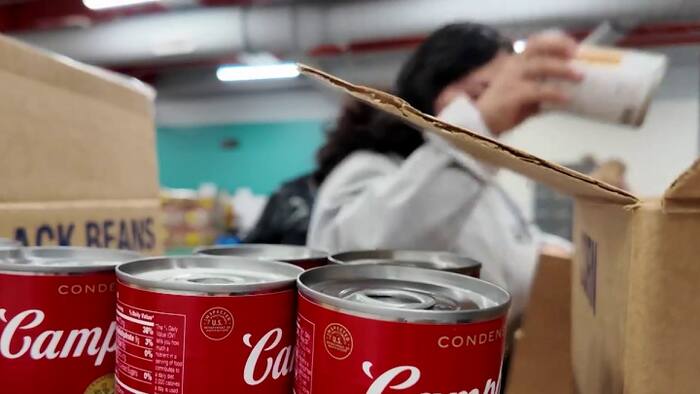
Voss said the Houston Food Bank provided about 136 million meals last year. About 700 of its partners distribute food through pantries, churches, schools and other sites. Even with that network, she said, “for every meal that we provide, SNAP provides nine.”
Target Hunger, one of those partners, reported a 40% increase in need at its pantries in the month before the interview. A representative said higher grocery and rent costs are squeezing families, including some waiting for SNAP applications to be processed. The nonprofit offers monthly food assistance and lets shoppers choose their groceries.
“We think the need is going to continue to go up, and we feel that we’re ready,” the Target Hunger representative said. “We will increase pantry days, we’ll increase hours. We’ll do whatever we can to help alleviate the food insecurity. People shouldn’t be hungry.”
Cabrera said she recently started working full time in medical coding again and has health insurance. She still thinks about how hard it was to keep food in the house while looking for work. Now, when she packs her son’s lunch, she sometimes puts in two bags of apple slices. If a friend asks for the extra bag, she tells him it’s OK to share.
“What I want people to know is it’s going to sound really simple, but love your neighbor,” Cabrera said.
She said that starts with getting to know the people around you, including the kids your children go to school with.
“You legitimately don’t know what the household next door to you is going through,” she said.
She wants lawmakers looking at the SNAP enrollment figures to remember what those numbers represent for people facing a layoff, rising bills or the loss of someone they depended on.
“This is so much more than numbers and data,” Cabrera said. “These are people’s lives. These are households.”


